RAYSONHIGH PERFORMANCE COATINGSMALAYSIA
Electronics and semiconductor · Johor, KL, Penang · Rayson-authorised applicators

Electronics and semiconductor plant floors in Malaysia, specified by the maker

Electronics and semiconductor plant flooring in Malaysia: StaticGuard CX90 ESD epoxy, SL120 halls and stores, PC70 wet rooms, by Rayson-authorised applicators.

We reply within one working day, Monday to Friday.

Rayson-authorised applicators in Johor, Kuala Lumpur and the Klang Valley, and Penang. Materials and data sheets nationwide.

What flooring does an electronics factory need?

Different floors for different zones: conductive epoxy such as Rayson StaticGuard CX90, earthed and tested, where the ESD programme applies; self-levelling LevelShield SL120 in production halls and stores outside it; PurScreed PC70 polyurethane-cement in wet and chemical rooms; a textured epoxy system in car parks.

Before you choose

Which areas need an ESD floor?

The ones the plant’s ESD programme names: assembly and test, SMT lines, repair benches, component stores and kitting. The programme is usually written to ANSI/ESD S20.20 or IEC 61340-5-1, and the floor is one element of it, with grounded work surfaces, footwear and procedures.

StaticGuard CX90 is conductive through its whole body, so the static path does not wear away with the surface; the ESD flooring page sets out how it is earthed and verified.
What goes outside the ESD area?

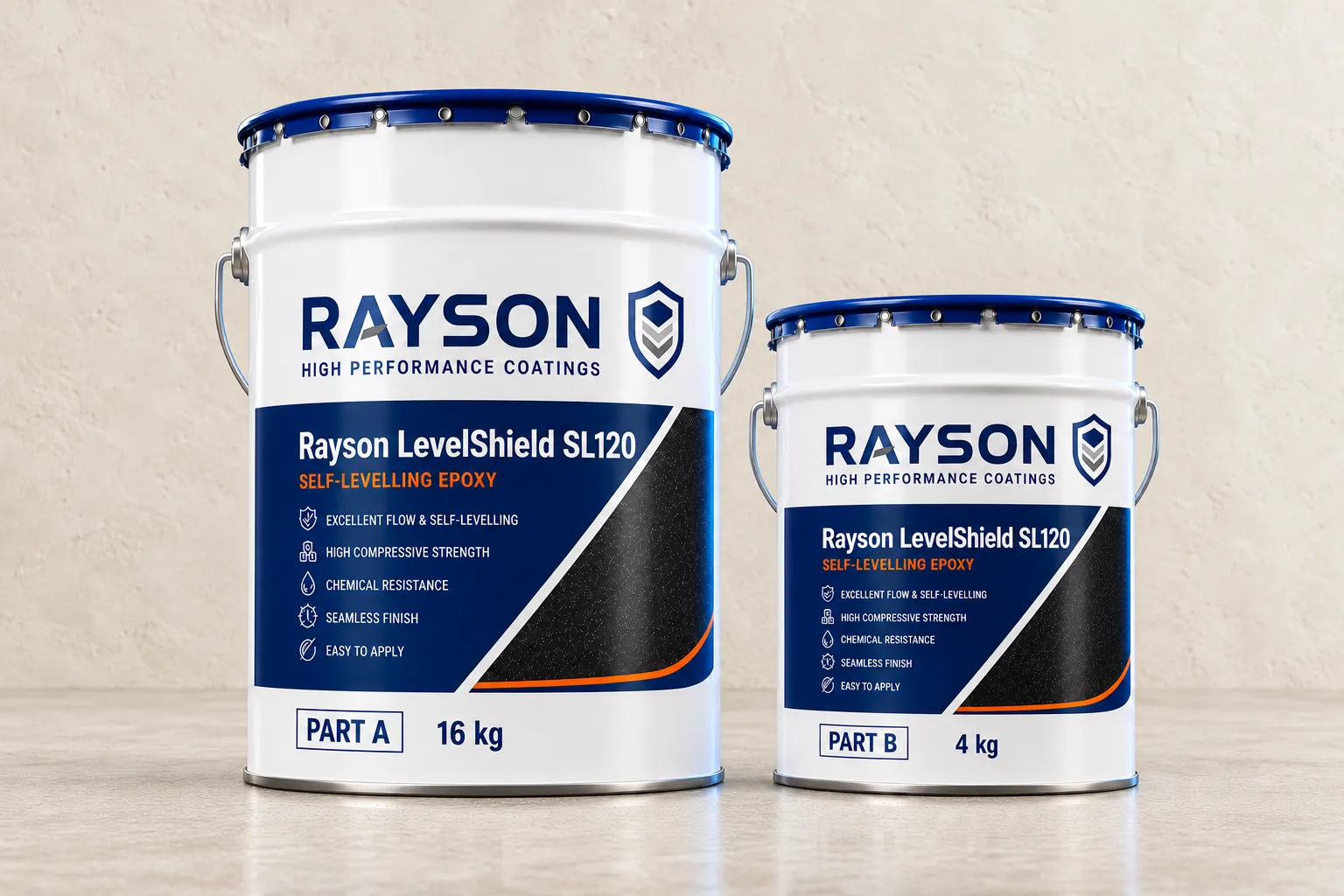
Most of the floor: production halls, corridors, warehouses and loading bays take LevelShield SL120 self-levelling epoxy, which its data sheet lists for production areas, warehouses and loading bays; wet and chemical rooms take PurScreed PC70; car parks the FloorGuard R50 textured system.

Keeping the conductive floor to the zones the programme names keeps the earthing, the testing and the cost where they belong.

Why does thickness matter on an ESD floor?

Because CX90 conducts less when it is laid thicker than specified. The data sheet targets 1.0 to 1.5 mm; the film is checked as it goes down, and the resistance is measured after cure and recorded for the plant.

Heavy traffic stays off for 72 hours, and full cure takes about seven days before the resistance test. Waxes and polymer polishes raise surface resistance, so the cleaning products are agreed at handover.

Can the plant keep running?

Yes, zone by zone. Each zone is closed, prepared, laid and cured before it returns to production; SL120 takes foot traffic after about 18 hours at 30 °C, and CX90 keeps heavy traffic off for 72 hours.

CX90, SL120 and the PrimeBond E20 primer are solvent-free, so they bring no solvent odour into an occupied plant; the order of zones is agreed with the facility team before work starts.

Which floor for which part of an electronics plant

Which floor for which part of an electronics plant
Compared onRayson systemBuildWhy it fits
Assembly, test, SMT lines and repair benchesStaticGuard CX90 conductive epoxy1.0 to 1.5 mm, over earthing pointsListed for electronics facilities; conductive through its body
Production halls, corridors and stores outside the ESD programmeLevelShield SL120 over PrimeBond E20Self-levellingListed for production areas, warehouses and loading bays
Wet and chemical roomsPurScreed PC70 PU-cement1.5 to 3 mm, trowelledHigh chemical resistance, checked against your chemical list
Car parksFloorGuard R50 broadcast systemTextured and sealedListed for multi-storey and underground car park decks

A first guide. The specification follows the plant’s ESD programme and the chemicals in each room.

What you see

The signs

  • ESD readings drifting out of the programme’s range
  • Worn or dusting floors in production halls and stores
  • Coating lifting in wet or chemical rooms
  • A new line or extension with floors still to be specified
Why it happens

The usual causes

  • ESD floors laid too thick, or without planned earthing points
  • One floor specified for zones with different duties
  • Waxes or polishes that leave an insulating film on an ESD floor
How the job runs

From three photos to a finished job

  1. Survey the plant

    The zones, the ESD programme’s targets, the chemicals in each room, the slab condition and the production schedule.

  2. Specification from the maker

    Systems, builds, earthing layout and data sheets for each zone, in writing, with the programme zone by zone.

  3. Install

    Grinding and repairs, primers and earthing points, then each system at the data-sheet build, with the CX90 film checked as it goes down.

  4. Test and hand over

    ESD resistance measured after cure and recorded; data sheets and test records in the handover file.

What to send

Three photos are enough for a first quotation

  1. The floor plan, with the ESD areas marked
  2. A zone, wide, and the worst patch, close
  3. Areas in sq ft per zone, the ESD targets, and when each zone can close

Send them on WhatsApp

What it costs

What does electronics factory flooring cost in Malaysia?

Per square foot, quoted after a survey. Five things decide it: the area by zone, the share that needs a conductive floor, the earthing and testing, the state of the slab, and the zone-by-zone programme around production. Rayson publishes no price list; contractors with their own crews can buy the systems direct.

Who stands behind the job

  • Rayson makes the materials, writes the specification and warrants the material.
  • The Rayson-authorised applicator for your area an independent company authorised by Rayson, contracts with you, inspects, quotes, installs and warrants the workmanship.
  • Rayson is not the installer and is not a party to the installation contract. Two warranties, two companies.
Where we work

Electronics and semiconductor plant floors in Johor, Kuala Lumpur and Penang

  • Johor Bahru
  • Iskandar Puteri
  • Pasir Gudang
  • Senai
  • Kulai
  • Kuala Lumpur
  • Petaling Jaya
  • Shah Alam
  • Subang Jaya
  • Penang

Independent, Rayson-authorised applicators in Johor, Kuala Lumpur and the Klang Valley, and Penang. Sites elsewhere are confirmed per enquiry; materials and data sheets are supplied nationwide.

Rayson materials on this job

Every layer has a published data sheet

Layers, top to bottom: StaticGuard CX90 conductive epoxy, 1.0–1.5 mm; PrimeBond E20 primer, earthing points to the agreed layout; Concrete slab, prepared and repaired

The build-up, top to bottom · diagram, not to scale

  1. StaticGuard CX90 conductive epoxy, 1.0–1.5 mm
  2. PrimeBond E20 primer, earthing points to the agreed layout
  3. Concrete slab, prepared and repaired

Outside the ESD programme: LevelShield SL120. Wet and chemical rooms: PurScreed PC70. Car parks: FloorGuard R50 broadcast system.

Rayson StaticGuard CX90 pail

Rayson StaticGuard CX90

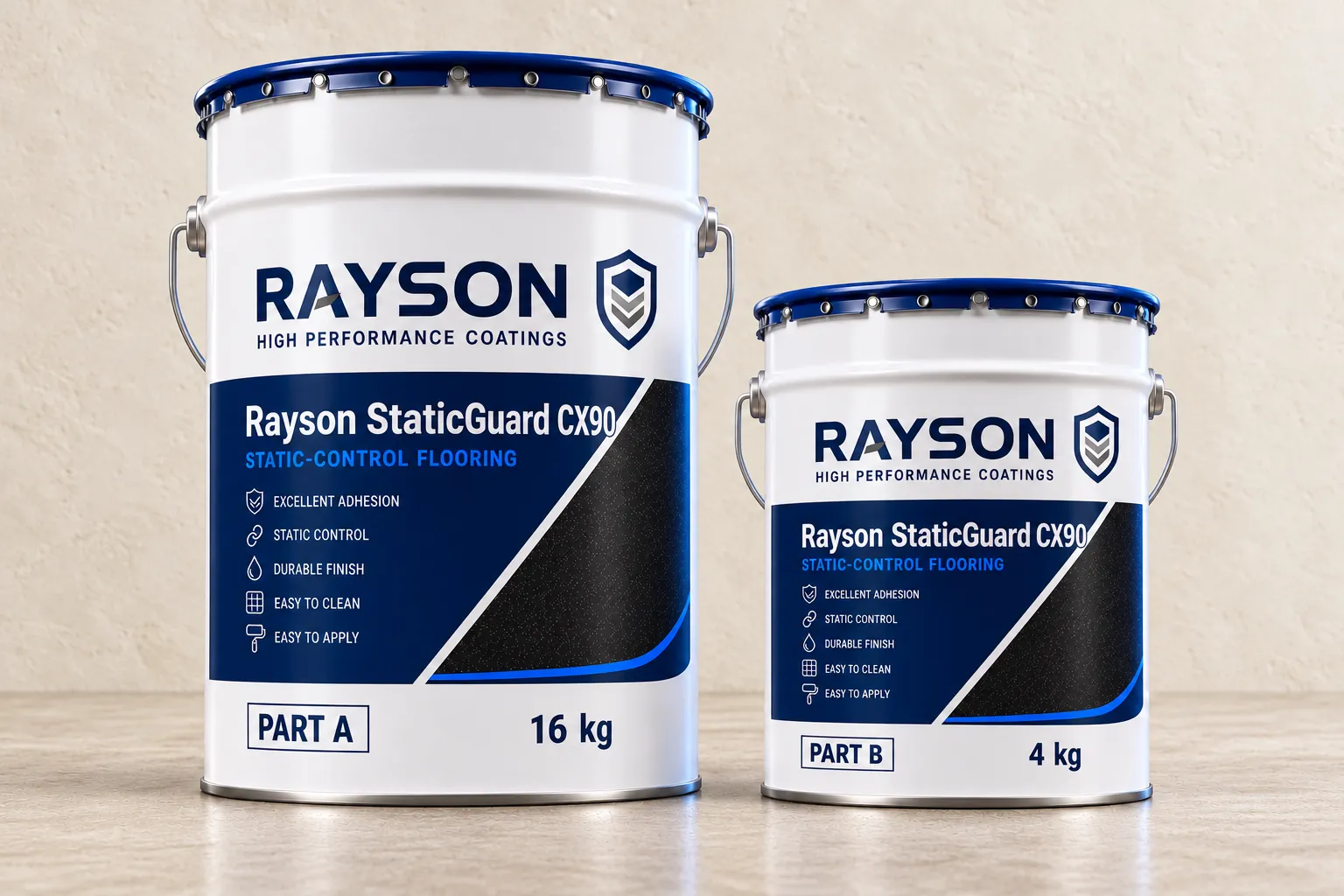
Rayson StaticGuard CX90 is a two-component, solvent-free conductive epoxy flooring that gives ESD-protected areas a self-smoothing, permanently conductive, chemically resistant wearing surface.

Specifications →
Rayson LevelShield SL120 pail

Rayson LevelShield SL120

Rayson LevelShield SL120 is a solvent-free, two-component, self-smoothing epoxy floor system that delivers a seamless wearing surface with medium to heavy chemical resistance and high mechanical strength.

Specifications →
Rayson PurScreed PC70 pail

Rayson PurScreed PC70

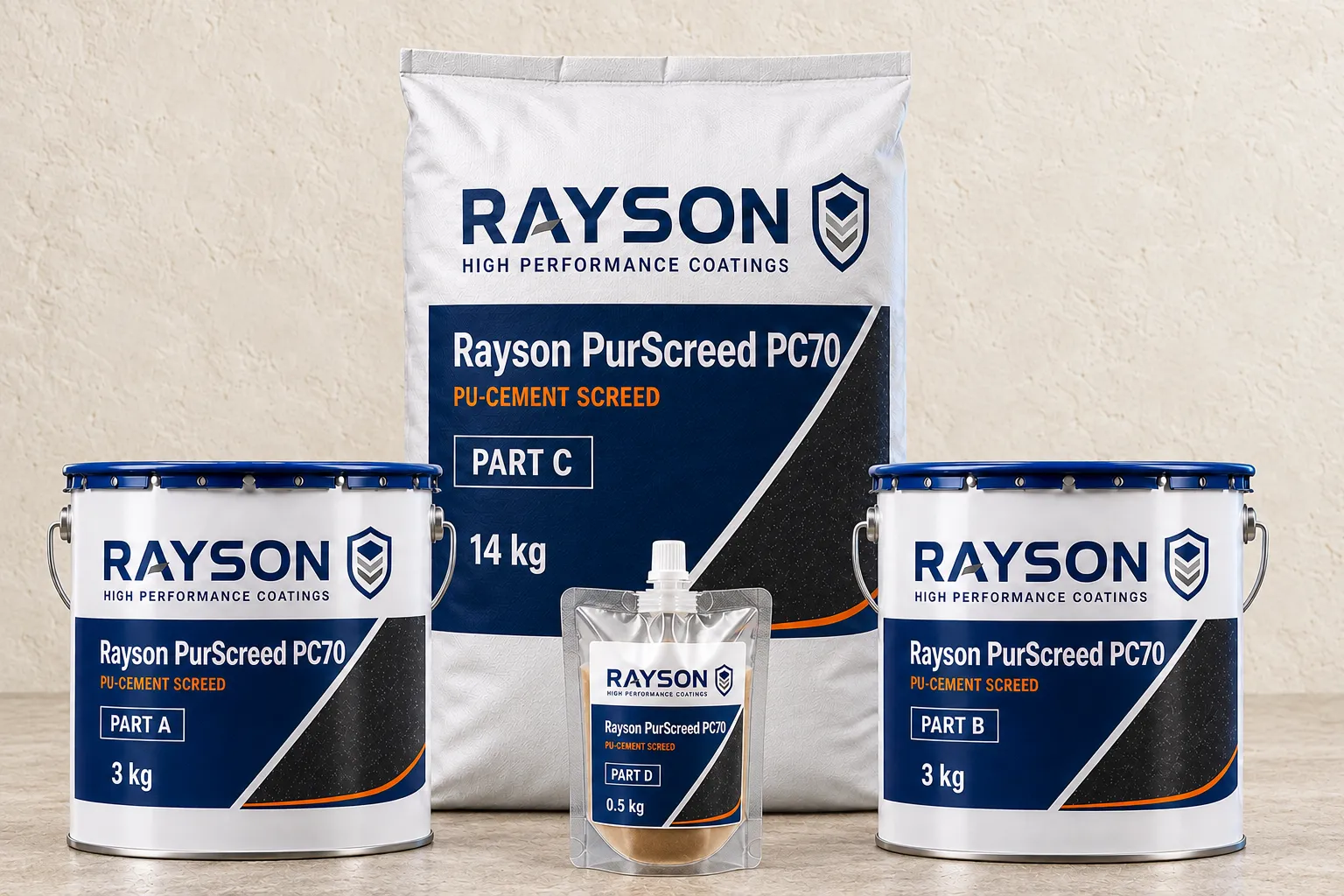
Rayson PurScreed PC70 is a four-part, water-based polyurethane-cement self-smoothing screed installed at 1.5–3 mm for medium to heavy-duty industrial floors with high chemical resistance.

Specifications →
Rayson FloorGuard R50 pail

Rayson FloorGuard R50

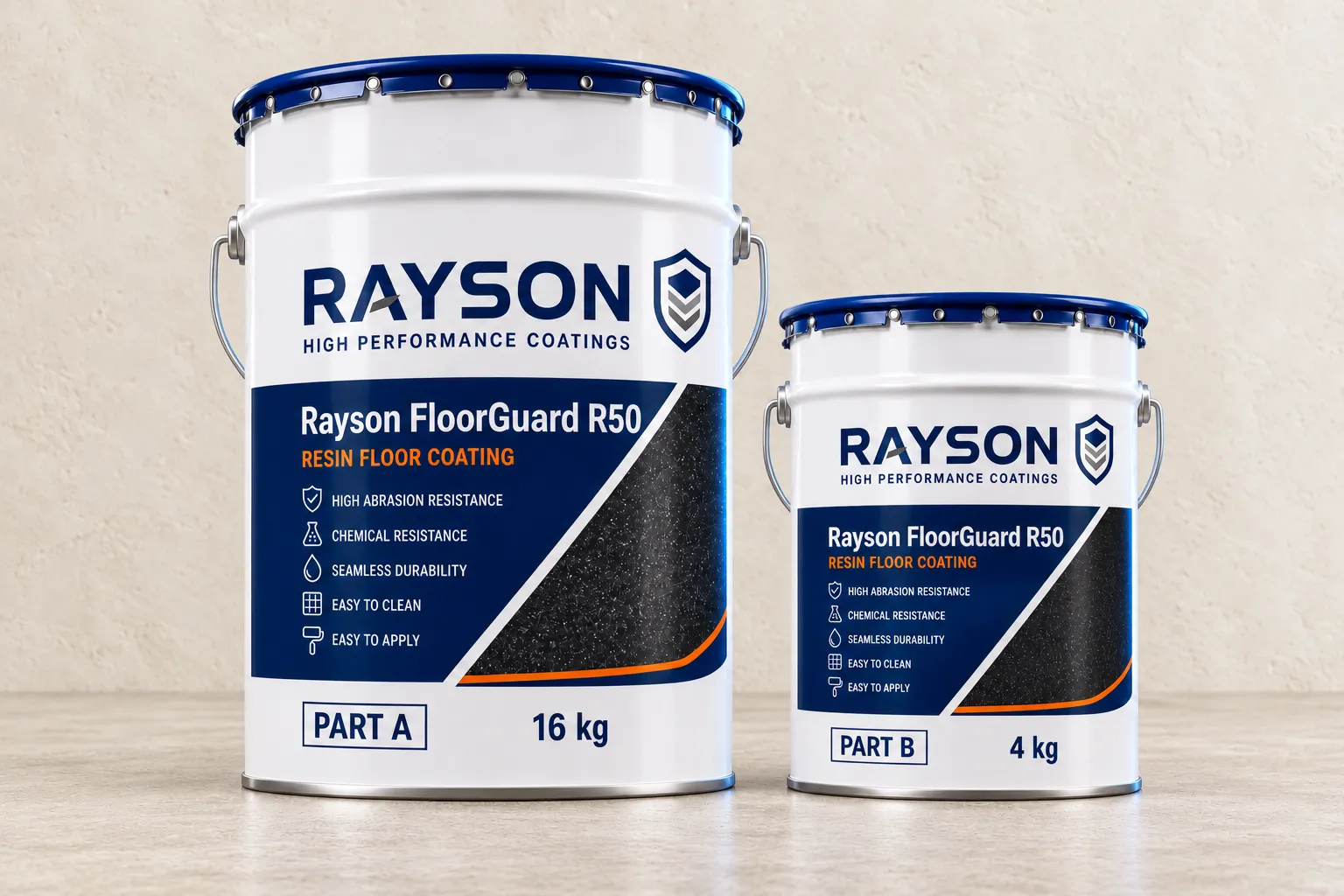
Rayson FloorGuard R50 is a two-component, solvent-free high-solids epoxy floor coating that cures to a smooth gloss — or a slip-resistant finish when broadcast with aggregate — for concrete and screed under normal to medium-heavy wear.

Specifications →
Rayson PrimeBond E20 pail

Rayson PrimeBond E20

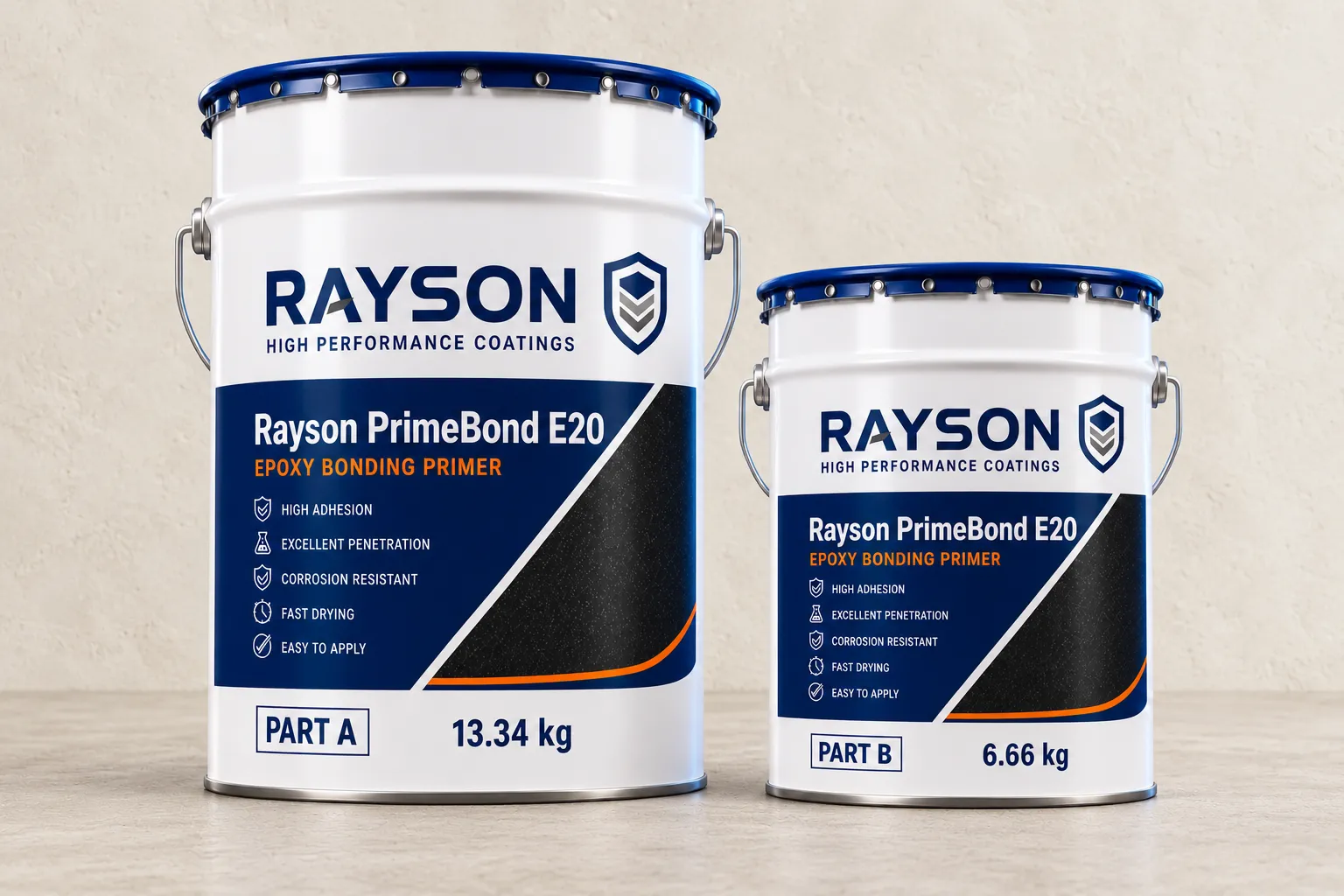
Rayson PrimeBond E20 is a two-component, medium-viscosity, solvent-free epoxy bonding primer that anchors resin floor systems to concrete, screed, asphalt and prepared metal — on dry or damp substrates.

Specifications →
The Rayson difference

An installer buys whatever is on the shelf. A Rayson-authorised applicator installs what Rayson makes.

01

The maker writes the specification

The system is specified by the company that makes the material, and installed by an independent applicator Rayson has authorised, not chosen from whatever a supplier had on the shelf that week.

02

A data sheet for every layer

Every Rayson material on your floor or roof has a published technical data sheet. You can read what went in, and so can your consultant.

03

Two warranties, two companies

Rayson warrants the material as its maker. The authorised applicator, an independent company that contracts with you, warrants the workmanship. Each warranty is issued by the company responsible for it.

04

Same materials on both sides of the Causeway

The products, data sheets and application methods are the ones Rayson publishes in Singapore. Nothing is rebadged for Malaysia.

05

Materials direct, for your own crew

Contractors and facility teams buy the same materials direct from the maker, with application guidance. The applicator is there when you want the job done for you.

Related jobs

Jobs that often come with this one

Each with the Rayson layers it uses

All industries ↗
01 Rayson system Layers: StaticGuard CX90 conductive epoxy, 1.0–1.5 mm; PrimeBond E20 primer, earthing points to the agreed layout; Concrete slab, prepared and repaired

Data centre floors

ESD floors, plant rooms, loading bays, car parks and roofs for data centres in Johor and across Malaysia.

  1. StaticGuard CX90 conductive epoxy, 1.0–1.5 mm
  2. PrimeBond E20 primer, earthing points to the agreed layout
  3. Concrete slab, prepared and repaired

Plant rooms and loading bays: LevelShield SL120. Car parks: FloorGuard R50 broadcast system. Roofs: SealForce RC40.

Quoted after inspection
02 Rayson system Layers: LevelShield SL120 self-levelling epoxy, coved at the walls; PrimeBond E20 epoxy primer; Concrete slab, prepared and moisture-tested

Pharmaceutical and medical device plant floors

Production rooms, clean rooms, device assembly, washdown rooms and stores in pharmaceutical and medical device plants, with smooth, cleanable floors and walls.

  1. LevelShield SL120 self-levelling epoxy, coved at the walls
  2. PrimeBond E20 epoxy primer
  3. Concrete slab, prepared and moisture-tested

Walls: UraForce WB58. ESD assembly: StaticGuard CX90. Washdown rooms: PurScreed PC70.

Quoted after inspection
03 Rayson system Layers: LevelShield SL120 self-levelling epoxy; PrimeBond E20 epoxy primer; Concrete slab, ground, joints and cracks repaired

Warehouse and logistics floors

Forklift aisles, racking zones and loading bays in warehouses and distribution centres, in self-levelling or roller-applied epoxy.

  1. LevelShield SL120 self-levelling epoxy
  2. PrimeBond E20 epoxy primer
  3. Concrete slab, ground, joints and cracks repaired

Racking and storage zones: FloorGuard R50 roller coats. Heavy traffic with spillage: PurScreed PC70.

Quoted after inspection
The practical details

Questions people ask

Do you cover Penang, Kulim and Johor?

Rayson-authorised applicators work in Penang, on the island and the mainland, in Johor, and in Kuala Lumpur and the Klang Valley. For plants in Kulim and elsewhere, Rayson supplies the materials, the data sheets and the method to the contractor’s own crew.

Does the floor alone make the area ESD-compliant?

No floor does. ANSI/ESD S20.20 and IEC 61340-5-1 describe a whole programme: grounded work surfaces, personnel grounding, handling procedures, training and periodic checks. The floor is one element, measured and documented.

Who gives the warranty?

Rayson warrants the materials as their maker; the Rayson-authorised applicator that lays the floor warrants its workmanship. Both are written into the quotation.

Start a conversation / ↗

Send the job, or ask for materials

Tell us what the surface is, where it is and what it has to withstand. Rayson replies with a system recommendation; for installation, the applicator for your area in Johor, Kuala Lumpur or Penang is introduced to quote the job.

Malaysia launch: 1 March 2027. Enquiries are welcome now; supply, site assessment and installation timing are confirmed for each project.

Thank you. Your enquiry has been received and we reply within one working day, Monday to Friday.

WhatsApp
WhatsApp three photos