RAYSONHIGH PERFORMANCE COATINGSMALAYSIA
Guide · Decorative finishes · Cost

Microcement cost in Malaysia: what sets the price per square foot

Microcement cost in Malaysia: what sets the price per square foot, why a bathroom costs more than a dry room, and what a fair quotation lists. No price list.

We reply within one working day, Monday to Friday.

By Rayson Malaysia (Epovex Coatings Sdn. Bhd.), the maker, from its data sheets. Published 25 October 2026.

Key facts

Key facts from the data sheets

  • Quoted per square foot after inspection, as a premium finish; Rayson publishes no price list.
  • IFS MicroCrete® microcement is a cement-based coating a few millimetres thick, hand-applied in layers and sealed; the finish and its terms are IFS’s, the layers underneath are Rayson materials.
  • In a bathroom or shower SealForce WB20 goes on first in two coats at 0.4 mm wet film each and passes a ponding test 24 hours after the final coat; a 20 kg pail covers about 18 m² at two coats.
  • WB20 goes on concrete, render or screed, not on glazed tiles, so in a wet room the old tiles come up or a new screed bonded with SealForce RW1 goes over them.
  • On a dry floor PrimeBond E20 primes concrete or screed at 6 to 8 m² per kg per coat; over firmly bonded tiles the applicator uses a bonding primer.
  • 1 m² is 10.76 sq ft: the data sheets give consumption per m², quotations run per sq ft.
Questions people ask

How much does microcement cost in Malaysia?

It is quoted per square foot after inspection, and it is a premium finish: several hand-applied layers, a sealer and a sample board, by a skilled applicator. The room decides more than the material. A dry living room over sound tiles is the simplest case; a shower with old tiles to remove and a membrane to lay is the dearest per square foot. Rayson publishes no price list.

Send three photos and the area, in square feet or square metres, for a first idea; the Rayson-authorised applicator for your area quotes in writing after seeing the room, with the base work, the membrane, the finish and the sample board listed.

Is microcement cheaper than tiles?

Usually not per square foot: tiles are a factory product laid once, microcement is a multi-layer finish applied by hand. Two things narrow the gap. In a dry room over firmly bonded tiles, microcement skips the hacking, the debris and the new screed that new tiles need. And it runs onto walls and stairs as one surface, where tiling adds trims and labour.

In a bathroom both finishes carry the same membrane under them, so the difference is the finish itself. The guide to microcement or tiles sets out when each is the better choice.

How much is microcement per square metre?

Quotations in Malaysia run per square foot; 1 m² is 10.76 sq ft, so multiply a per-square-foot price by 10.76 for the metre. The material underneath is given per square metre on the data sheets: SealForce WB20 at about 0.56 kg/m² a coat in two coats, PrimeBond E20 at 6 to 8 m² per kg; the microcement’s own consumption is on the IFS system sheet.

Walls and stairs are measured as well as the floor, and small rooms carry more labour per square foot than one open floor, because the edges, corners and the sample board take the same time whatever the size.

What decides the cost of microcement?

Six things: the base (sound tiles that stay, hollow tiles that come out and are patched, or a new screed), walls and stairs against open floor, the membrane in a wet room, the sample board, the layers and the sealer the IFS system calls for, and the area, access and working hours. The base and the wet room are usually the two that move the price most.

That is why two quotations for the same room can differ: one has the old tiles out and a membrane in, the other coats over them. Compare the lists line by line, not the totals.

Does a bathroom cost more than a dry room?

Yes. In a bathroom or shower the microcement is only the finish: the waterproofing is SealForce WB20 underneath, in two coats on concrete, render or screed, with a 24-hour ponding test before any finish goes on. WB20 does not go on glazed tiles, so the old tiles come up, or a new screed bonded with SealForce RW1 goes over them, and the falls to the drain are corrected in that screed.

A dry room has none of that: the applicator checks the base, primes it with PrimeBond E20 on concrete or screed, or a bonding primer over sound tiles, and starts the layers. The membrane, the test and the screed are what a bathroom pays for, whichever finish goes on top.

Can I save by keeping the old tiles?

In a dry room, usually yes: over firmly bonded tiles the applicator taps every tile, takes out hollow ones, fills the grout lines and primes, so there is no hacking and far less noise and debris. In a wet room, no: the membrane needs render or screed under it, not glaze.

Hollow tiles count: the inspection taps them all before the quotation, and a floor with many loose tiles is better hacked and screeded. Keeping tiles that are not sound costs more later, when the finish shows the crack.

Is microcement expensive to install?

It is skilled work over several working days: the base checked and repaired, the primer or the membrane and its test, then thin layers that each cure before the next, and the sealer last. The sample board comes first, so colour and texture are agreed in the room’s light before any of it starts.

In a strata building the applicator plans the working hours, the lift and corridor protection and the renovation permit with the management, which is part of the programme and the price.
What sets the price

The six things that set the price

  1. The base

    Sound tiles that stay, hollow tiles that come out and are patched, cracks and hollow render repaired, or a new screed. On an old floor this is most of the labour.

  2. Walls and stairs

    The same finish can run across the floor, the walls and the stairs; each is measured, and stairs take detailing at every edge.

  3. A wet room

    SealForce WB20 in two coats on render or screed, the 24-hour ponding test, and the falls to the drain corrected first; old tiles come up because the membrane does not go on glaze.

  4. The sample board

    Colour, texture and sheen confirmed on a physical sample in the room’s light, and the build-up over your base confirmed on it, before the room starts.

  5. Layers and sealer

    The IFS MicroCrete® system’s primer, base coats, finish coats and sealer, each curing before the next; the finish chosen for grip in a shower.

  6. Area, access and hours

    Small rooms carry more labour per square foot than open floors; condo working hours, lifts and permits add days; distance from the applicator adds travel.

The layers

A bathroom and a dry room, layer by layer

Layers, top to bottom: MicroCrete® microcement, trowelled and sealed · IFS partner range; SealForce WB20 membrane in bathrooms and showers; Screed or render, laid to falls

The build-up, top to bottom · diagram, not to scale

  1. MicroCrete® microcement, trowelled and sealed · IFS partner range
  2. SealForce WB20 membrane in bathrooms and showers
  3. Screed or render, laid to falls

Dry rooms: PrimeBond E20 on concrete or screed, or a bonding primer over firmly bonded tiles, in place of the membrane.

A bathroom: IFS MicroCrete® over SealForce WB20 on a screed laid to falls, after the 24-hour ponding test.
Layers, top to bottom: MicroCrete® microcement, trowelled and sealed · IFS partner range; PrimeBond E20 on concrete or screed, or a bonding primer over firmly bonded tiles; Existing floor: concrete, screed or firmly bonded tiles

The build-up, top to bottom · diagram, not to scale

  1. MicroCrete® microcement, trowelled and sealed · IFS partner range
  2. PrimeBond E20 on concrete or screed, or a bonding primer over firmly bonded tiles
  3. Existing floor: concrete, screed or firmly bonded tiles

A bathroom or shower takes SealForce WB20 under the microcement instead, on render or screed, after a 24-hour ponding test.

A dry room: IFS MicroCrete® over PrimeBond E20 on concrete or screed, or over a bonding primer on firmly bonded tiles.
Before you sign

What a fair microcement quotation lists

  • The area, measured on site, in square feet, floor and walls separately
  • The base work: which tiles come out, repairs, or a new screed
  • In a wet room, SealForce WB20 by name, the coats and the ponding test
  • The primer on a dry floor, by name
  • The IFS MicroCrete® system by name: layers, finish and sealer
  • The sample board, and that the colour is signed off on it
  • When each area can be walked on and used
  • Who warrants what: IFS the finish, Rayson the layers underneath, the applicator the workmanship
Ask the applicator

Questions to ask before you sign

  1. Did you tap the old tiles, and are they staying or coming out?
  2. Is this room ever wet, and where is the membrane and its test in the quotation?
  3. Which sealer goes on, and when is it renewed?
  4. Is the sample board included, and will the colour be signed off on it?
  5. How many working days, and what are the condo’s working hours?
  6. Is the price per square foot for the floor only, or for walls and stairs too?
What to send

Three photos are enough for a first quotation

  1. The room, wide, with the floor and walls in view
  2. The surface close: tiles, screed or plaster, and any hollow-sounding tiles
  3. A look you like, and the building: condo, landed home or shop

Send them on WhatsApp

Who you deal with

  • Rayson makes the materials, writes the specification and warrants the material. It sells the materials direct through Epovex Coatings Sdn. Bhd., quoted per order.
  • The Rayson-authorised applicator for your area an independent company in Johor, Kuala Lumpur and the Klang Valley, or Penang, inspects, quotes per square foot, contracts with you and warrants the workmanship.
  • Rayson is not the installer and is not a party to the installation contract. Two warranties, two companies.
Rayson materials in this guide

Every Rayson layer has a published data sheet

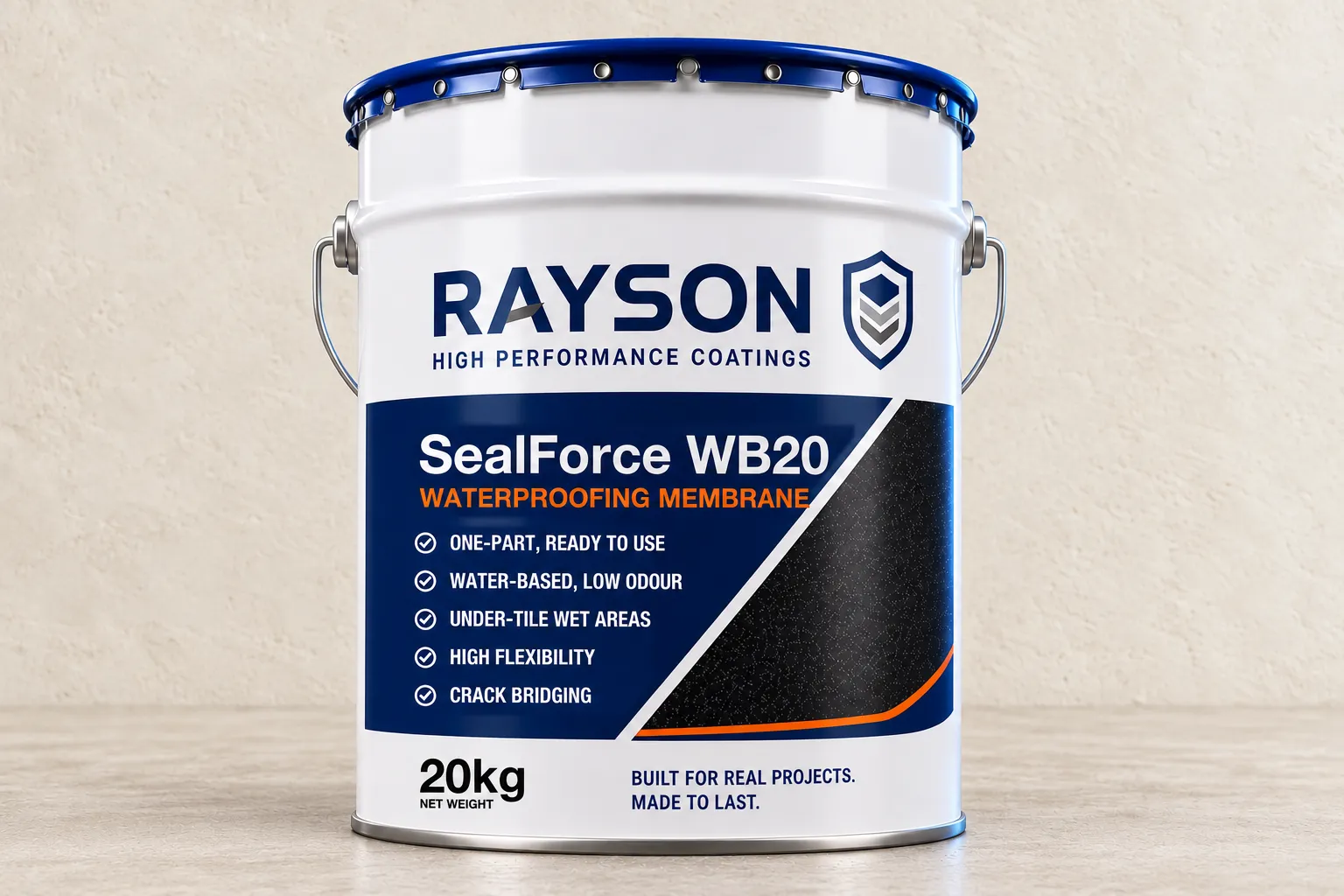
Rayson SealForce WB20 pail

Rayson SealForce WB20

Rayson SealForce WB20 is a one-part, water-based, polyurethane-modified waterproofing membrane for toilets, showers, bathrooms, balconies and other interior wet areas — rolled or brushed on in two coats and concealed beneath the tiles, screed or render.

Specifications →
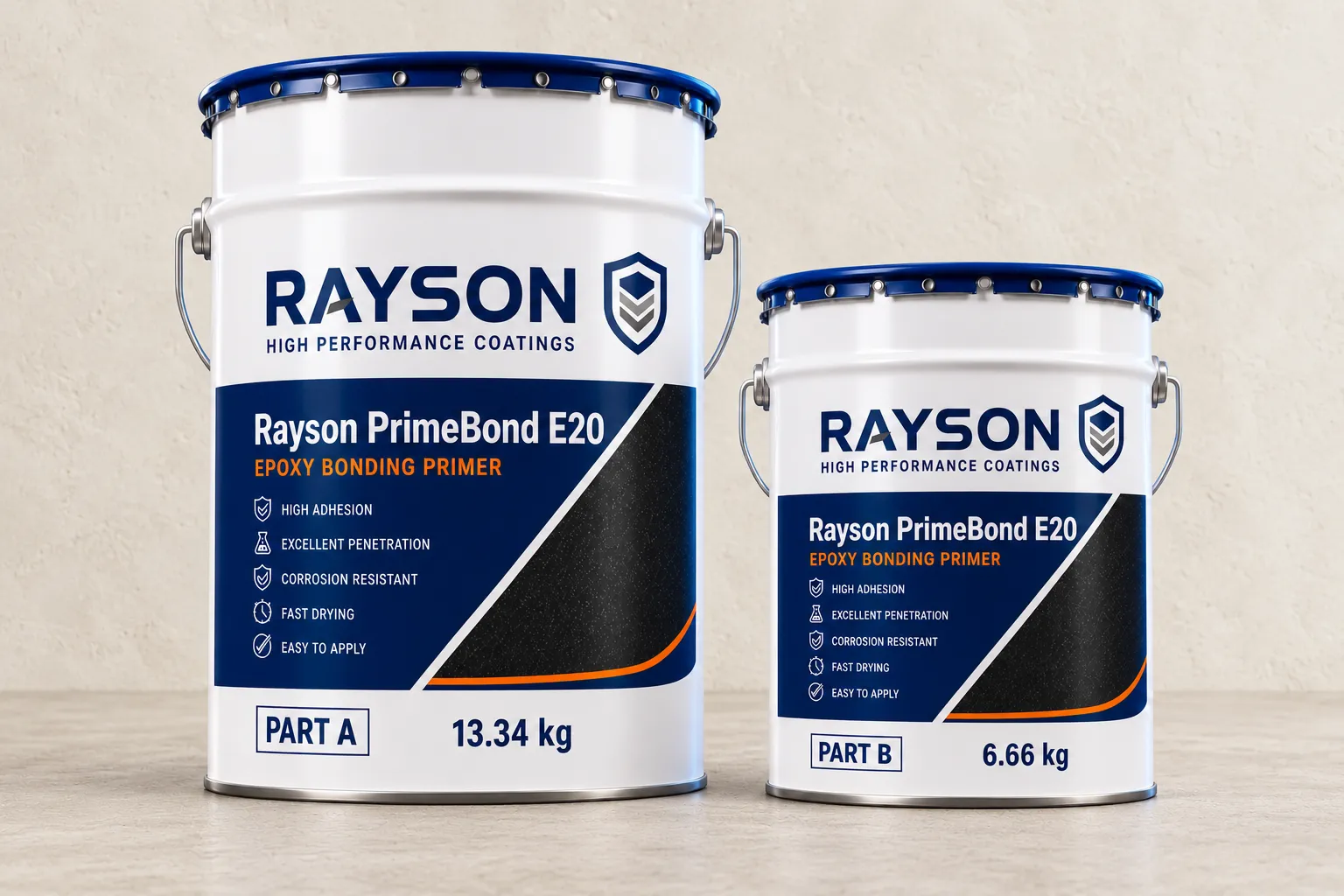
Rayson PrimeBond E20 pail

Rayson PrimeBond E20

Rayson PrimeBond E20 is a two-component, medium-viscosity, solvent-free epoxy bonding primer that anchors resin floor systems to concrete, screed, asphalt and prepared metal — on dry or damp substrates.

Specifications →
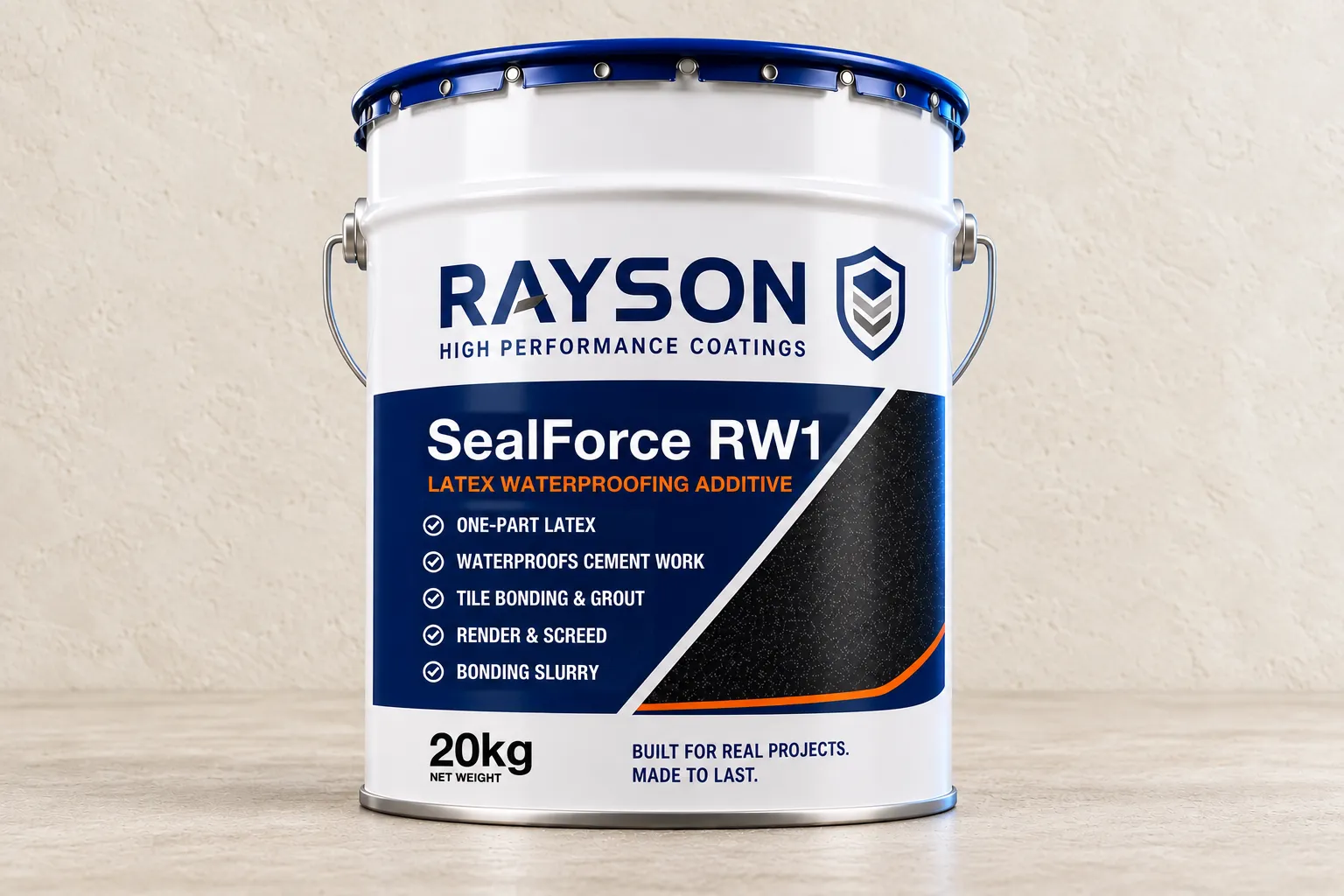
Rayson SealForce RW1 pail

Rayson SealForce RW1

Rayson SealForce RW1 is a one-part latex waterproofing and bonding additive for cement-based work — mixed into renders, screeds, slurry coats, tile adhesives and grout to cut water penetration, strengthen the mortar and improve its bond and flexibility.

Specifications →
Go deeper

The pages for the work itself

Each with the Rayson layers it uses

01 IFS finish · Rayson base Layers: MicroCrete® microcement, trowelled and sealed · IFS partner range; SealForce WB20 membrane in bathrooms and showers; Screed or render, laid to falls

Microcement in KL, Selangor and Penang

Seamless IFS MicroCrete® for condo bathrooms, floors and walls, with Rayson waterproofing under every wet area.

  1. MicroCrete® microcement, trowelled and sealed · IFS partner range
  2. SealForce WB20 membrane in bathrooms and showers
  3. Screed or render, laid to falls

Dry rooms: PrimeBond E20 on concrete or screed, or a bonding primer over firmly bonded tiles, in place of the membrane.

Quoted after inspection
02 Rayson system Layers: New tiles, once the 24-hour ponding test holds; Tile adhesive and grout with SealForce RW1; SealForce WB20, two coats, up the walls and round the trap; Screed repaired and laid to fall to the trap; Floor slab over the unit below

Toilet and bathroom waterproofing in KL and Selangor

Condo and landed-home bathrooms in the Klang Valley re-waterproofed with SealForce WB20 under the tiles, ponding-tested before anything goes back.

  1. New tiles, once the 24-hour ponding test holds
  2. Tile adhesive and grout with SealForce RW1
  3. SealForce WB20, two coats, up the walls and round the trap
  4. Screed repaired and laid to fall to the trap
  5. Floor slab over the unit below

Seamless instead of tiles: IFS MicroCrete® over the same ponding-tested WB20, confirmed on a sample first.

Quoted after inspection
03 Rayson system Layers: Tiles, laid after the 24-hour flood test; Tile bed with SealForce RW1; SealForce WB20, two coats, turned up the walls; Screed with SealForce RW1; Floor slab

Toilet and bathroom waterproofing

The membrane under the tiles, done once and flood-tested before the tiler starts.

  1. Tiles, laid after the 24-hour flood test
  2. Tile bed with SealForce RW1
  3. SealForce WB20, two coats, turned up the walls
  4. Screed with SealForce RW1
  5. Floor slab
Quoted after inspection
More guides

Other decisions before you buy a floor

  • What decides the cost of epoxy flooring: The six things that set the price per square foot, what a fair quotation lists, and the questions to ask before you sign.
  • Microcement vs tiles: For bathrooms, condos and shops: which is better where, covering old tiles without hacking, the waterproofing under both, disadvantages, repairs and cost.
  • Epoxy vs tiles: For homes, porches, garages, kitchens and shops: which is better where, coating over tiles, slip, sunlight, repairs, disadvantages and cost.
  • Epoxy over tiles: Whether an epoxy floor can go over existing tiles, how an applicator prepares and primes them, what it costs against hacking, and when the tiles must come up.

All guides

The practical details

Questions people ask

Is microcement available in Malaysia?

Yes: independent, Rayson-authorised applicators install IFS MicroCrete® in Kuala Lumpur and the Klang Valley, Penang and Johor, over the Rayson layers underneath and the SealForce WB20 membrane in wet areas, once the sample board is agreed.

Is the sample board extra?

Ask for it in the quotation. The sample board is where colour, texture and the build-up over your base are agreed; the quotation should say whether it is included and what it covers.

Do walls cost more than floors?

Per square foot they are usually similar, but walls and stairs add edges, corners and masking, so a room done floor to ceiling takes more days than its floor area suggests. The quotation measures them separately.

How long does a microcement job take?

Several working days: the base, the primer or the membrane and its 24-hour test, then the layers, each curing before the next, and the sealer last. The applicator sets out the programme in the quotation.

Who quotes, and who warrants it?

The Rayson-authorised applicator for your area quotes per square foot after inspection, contracts with you and warrants the workmanship; IFS’s terms cover the MicroCrete® finish; Rayson warrants the layers underneath as their maker. Rayson publishes no price list.

Start a conversation / ↗

Send the job, or ask for materials

Tell us what the surface is, where it is and what it has to withstand. Rayson replies with a system recommendation; for installation, the applicator for your area in Johor, Kuala Lumpur or Penang is introduced to quote the job.

Malaysia launch: 1 March 2027. Enquiries are welcome now; supply, site assessment and installation timing are confirmed for each project.

Thank you. Your enquiry has been received and we reply within one working day, Monday to Friday.

WhatsApp
WhatsApp three photos