Can epoxy flooring be applied over tiles?
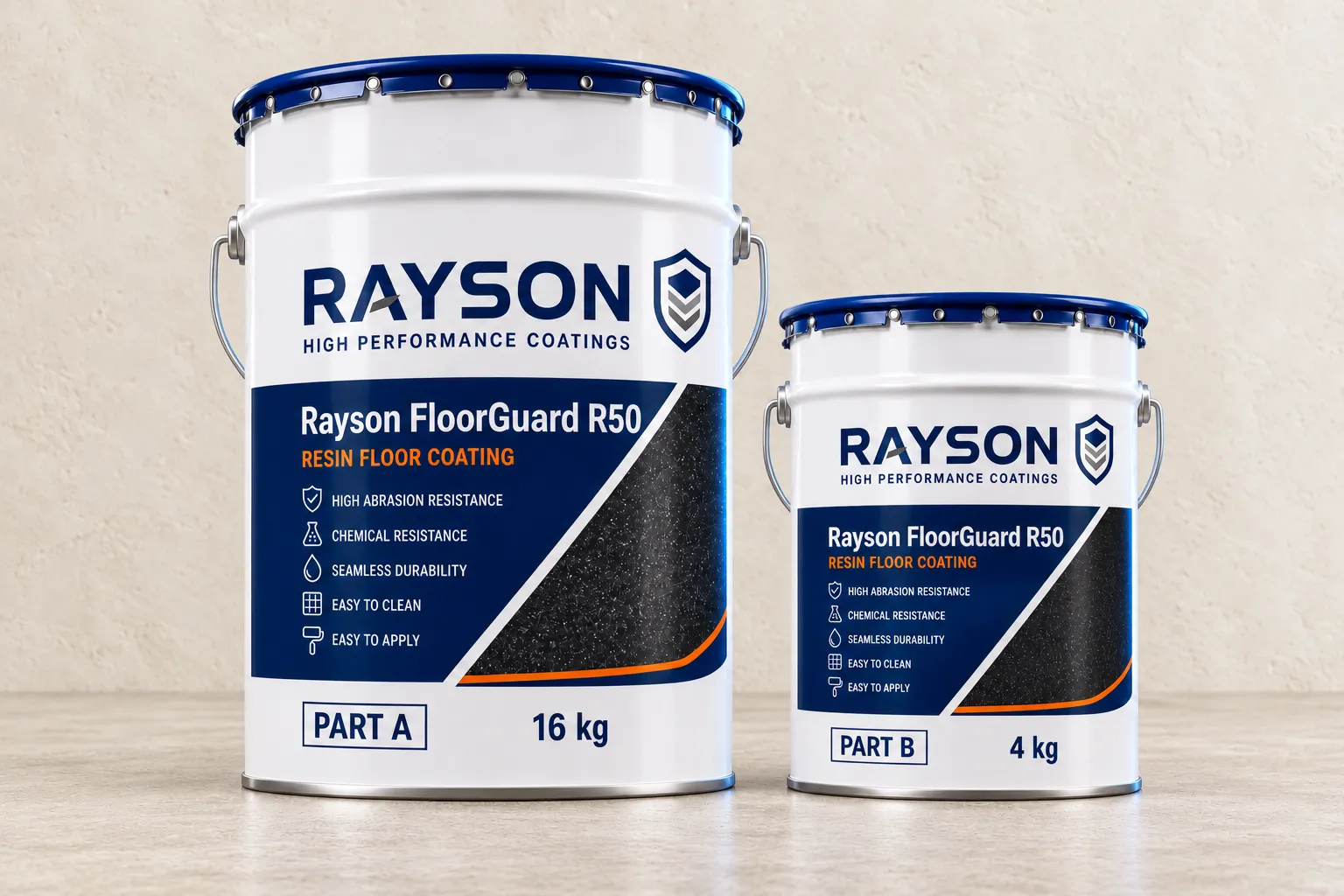
Yes, in a dry room, over tiles that are firmly bonded, keyed and primed. The applicator taps every tile and takes out the hollow ones, patches the gaps, degreases and grinds the glaze so the primer has something to grip, fills the grout lines so they do not show through as a grid, and applies a bonding primer made for glazed tiles. FloorGuard R50 then goes on in two coats.
The preparation is the job. Glazed tiles are dense and smooth, so adhesion comes from the key and the primer, and the applicator confirms it on a trial patch before coating the room. Door clearances and thresholds are checked, though the build-up is thin.
Can I use epoxy paint on tiles myself?
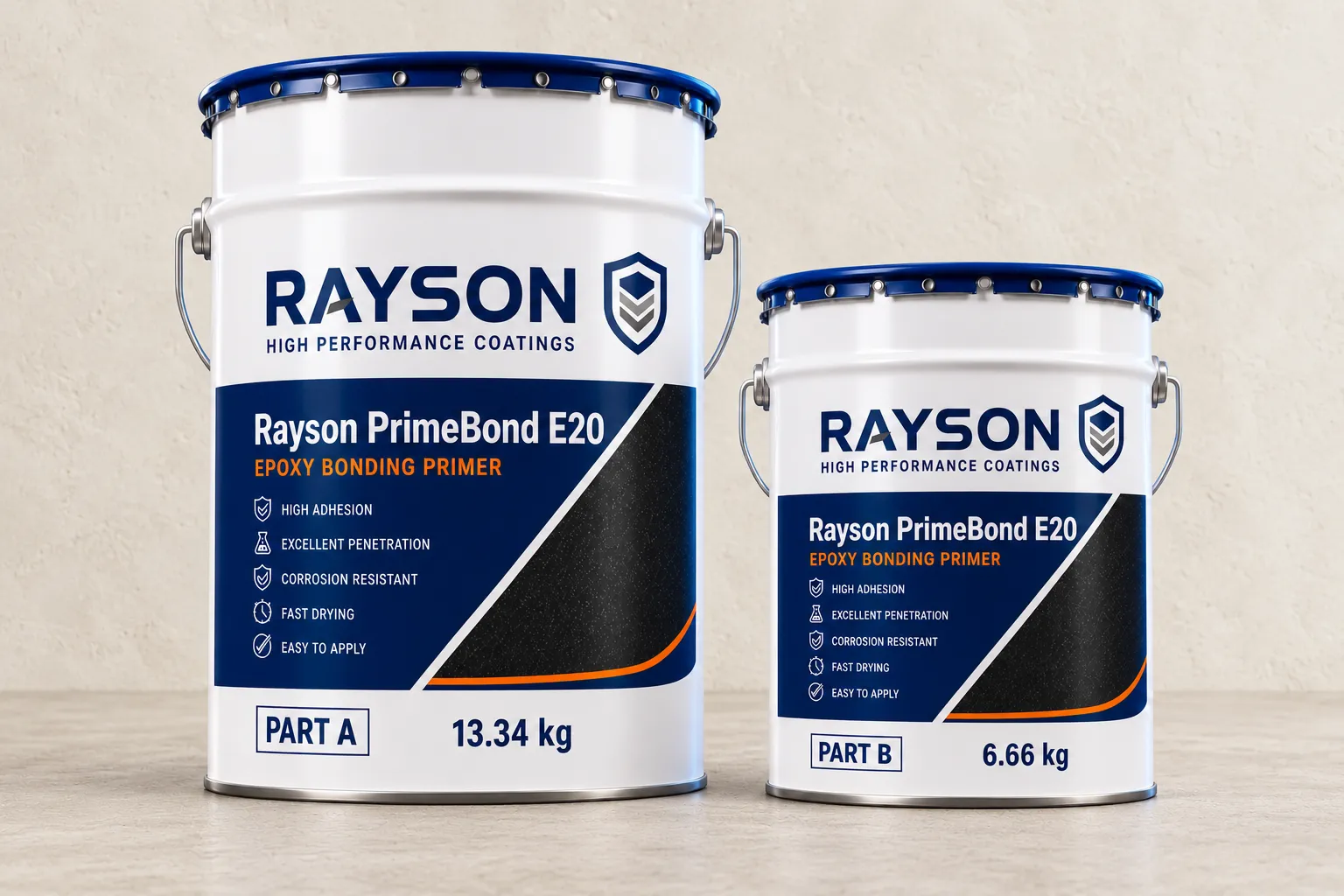
Not with the Rayson do-it-yourself system. PrimeBond E20 is a primer for concrete, screed, sound old epoxy, asphalt and prepared metal; it is not made for glazed tiles, and a coating that does not bond to the glaze peels from the first wet mop. The tile-paint kits sold online are a different product class with their own primers and data sheets.
For bare indoor concrete, the epoxy floor paint guide covers applying FloorGuard R50 yourself. Over tiles, the bonding primer and the trial patch are what make the floor last, and that is an applicator’s work.
Can I epoxy over bathroom tiles?
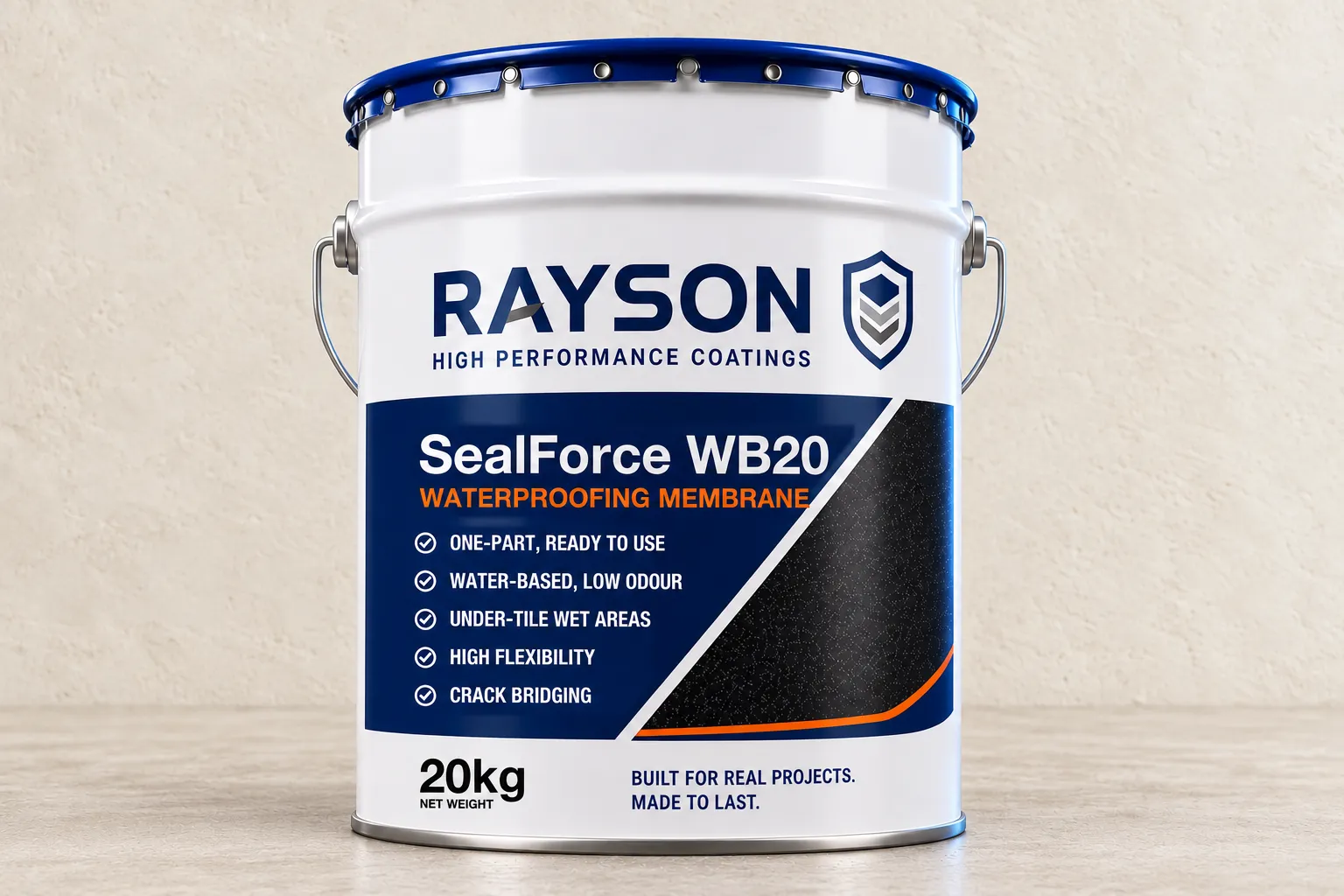
In a powder room or a dry utility floor, yes, as above. In a shower or a wet bathroom, no: the waterproofing is the membrane under the tiles, and a coating on top does not stop water getting into the screed or through to the room below. If the floor leaks, the tiles come up and SealForce WB20 goes on in two coats with a 24-hour ponding test before any finish.
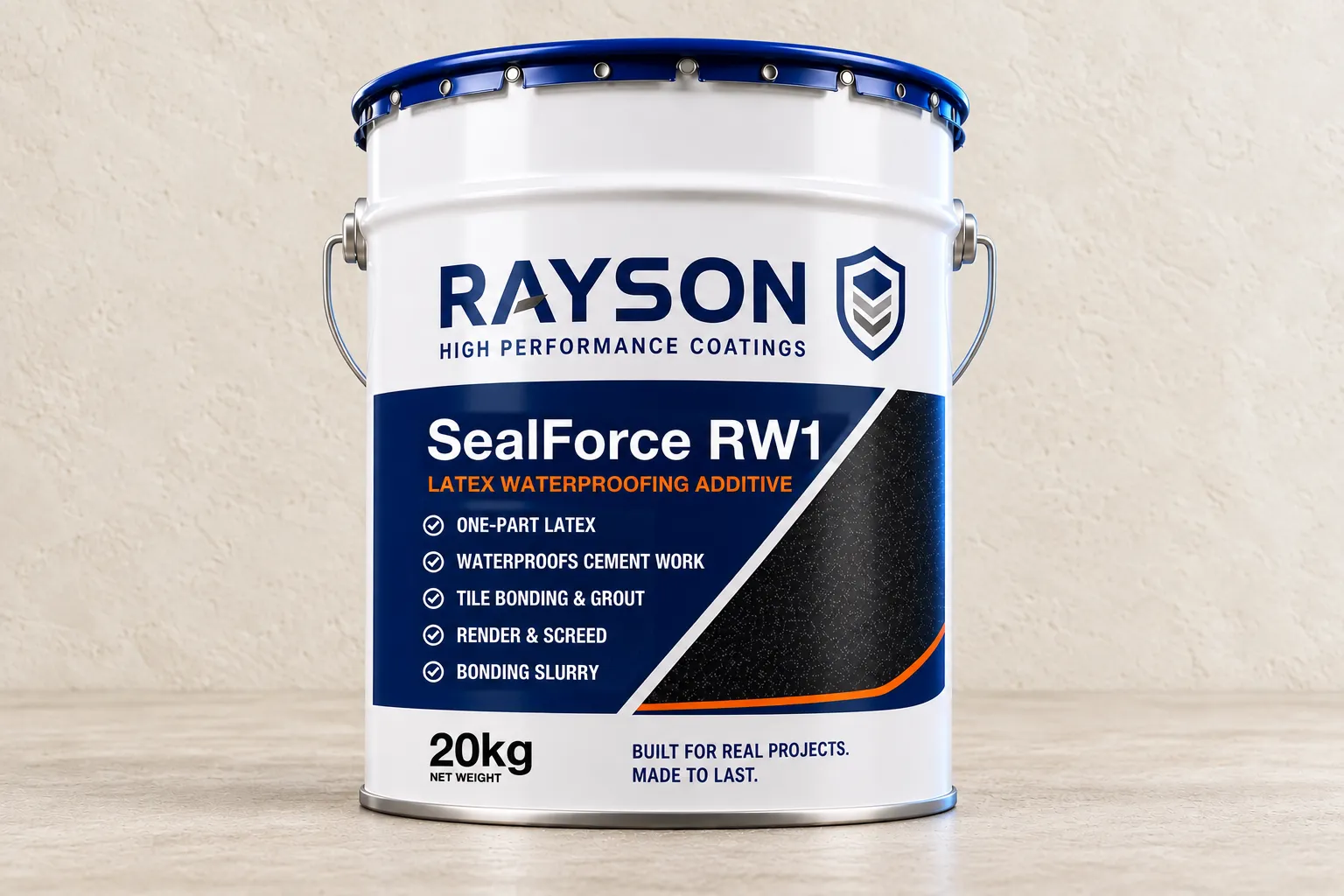
Where the old tiles are sound and the problem is the look, not a leak, the applicator can lay new tiles on the old with SealForce RW1 in the bed and grout, without hacking. Either way the floor keeps its falls to the drain.
Does epoxy stick to tiles?
Only with a key and the right primer. Glaze is made not to absorb anything, so the applicator grinds it to a dull, scratched surface, cleans off the dust and grease, and uses a bonding primer specified for glazed tiles, then checks adhesion on a trial patch. On unglazed tiles and pavers the key is easier, and Rayson GripSafe AP12 lists unglazed tiles among its substrates.
Epoxy that fails over tiles usually fails at the glaze or at a hollow tile, not within the coating. That is why the inspection taps every tile and why a trial patch comes before the quotation is final.
Is epoxy over tiles cheaper than hacking them off?
Often, because it avoids the hacking, the debris, a new screed and the days of noise, and the preparation is grinding and priming rather than breaking out. It is not cheap: grinding glaze takes longer than grinding concrete, hollow tiles are taken out and patched, and the bonding primer is an extra product. Where many tiles are loose, hacking and a new screed are the better job.
Five things set the price: the area and layout, how many tiles are hollow, how much grinding the glaze needs, the system (a roller coat, or a self-levelling floor where levels matter), and the topcoat and texture. The applicator quotes per square foot after inspection; Rayson publishes no price list.
How long does epoxy over tiles last, and what can go wrong?
As long as the tiles underneath stay bonded and dry. The risks are a hollow tile that lets go, grout lines that show through if they were not filled, moisture under the tiles that blisters the coating, and daylight that yellows an epoxy with no topcoat. Each has a step in the preparation that prevents it.
A repair is ground, primed and recoated in the area; on an older floor the patch can show, so sometimes a whole area is recoated. Rayson warrants the material; the applicator warrants the workmanship.
When should the tiles come up instead?
When many are hollow or loose, when the floor leaks or the slab is damp, when the room is a shower or wet bathroom, when the levels at doors and drains do not work with a build-up on top, and when the tiles are already breaking up. Then the applicator hacks them off, lays a new screed and primes it with PrimeBond E20, or waterproofs it first.
A floor with a few hollow tiles is still a candidate: the hollow ones come out and are patched. The inspection counts them before the quotation.