RAYSONHIGH PERFORMANCE COATINGSMALAYSIA
Guide · Epoxy flooring · Malaysia

Epoxy flooring cost in Malaysia: what sets the price per square foot

How much epoxy flooring costs in Malaysia: what sets the price per square foot, labour against material, and what a fair quotation lists. No price list.

We reply within one working day, Monday to Friday.

By Rayson Malaysia (Epovex Coatings Sdn. Bhd.), the maker, from its data sheets. Published 25 October 2026.

Key facts

Key facts from the data sheets

  • Quoted per square foot after inspection; Rayson publishes no price list and sells material per order.
  • A two-coat FloorGuard R50 floor uses 0.6 to 1.0 kg/m²; a 20 kg set covers about 20 to 33 m² (215 to 360 sq ft).
  • A 20 kg PrimeBond E20 set primes 120 to 160 m² per coat.
  • LevelShield SL120 self-levelling epoxy uses 1.6 to 2.0 kg/m², two to three times the resin of a roller coat.
  • PurScreed PC70 PU-cement at 1.5 to 3 mm uses 2.7 to 5.4 kg/m², three to nine times.
  • Concrete at least 28 days old with moisture of 5% or less; full cure in 7 days.
  • 1 m² is 10.76 sq ft: data sheets give consumption per m², quotations run per sq ft.
Questions people ask

How much does epoxy flooring cost in Malaysia?

It is quoted per square foot after inspection, because preparation, the system and the area change the cost from floor to floor, and Rayson, the maker, publishes no price list. What is fixed is the material: a two-coat FloorGuard R50 floor uses 0.6 to 1.0 kg/m², LevelShield SL120 self-levelling epoxy 1.6 to 2.0 kg/m², and a PurScreed PC70 PU-cement screed 2.7 to 5.4 kg/m², so the system you choose sets the material cost before any labour is counted.

Send three photos and the area, in square feet or square metres, for a first idea; the Rayson-authorised applicator for your area gives a written quotation after seeing the floor, with labour and material listed. The table under the six factors gives the material for each system.

Why is epoxy flooring quoted per square foot after inspection?

Because two floors of the same size can need very different work. A sound, dry slab needs grinding and a primer; a cracked, oily or damp one needs repairs, degreasing and a moisture check first, and an old coating may have to come off. None of that shows in the area alone.

Photos and the area give a first idea, and the inspection fixes the preparation, the system and the programme. That is why Rayson publishes no price list: a price given before the slab is tested would have to guess at the work.

How much does the system change the price?

The system decides how much material goes down and how long the work takes. A FloorGuard R50 roller coat uses 0.3 to 0.5 kg/m² a coat in two coats, so a 20 kg set covers about 20 to 33 m² (215 to 360 sq ft); LevelShield SL120 self-levelling epoxy uses 1.6 to 2.0 kg/m²; PurScreed PC70 PU-cement is laid at 1.5 to 3 mm, about 1.8 kg/m² per millimetre. Each step up is more material and more labour.

The cheapest system is not the cheapest floor if it is wrong for the traffic: a roller coat under forklifts wears through, and epoxy under hot washdown fails where PU-cement lasts. The specification matches the system to the floor first, and the price follows.

How much of the price is labour, and how much is material?

An applicator’s quotation bundles three things: the labour of preparation and application, the material at the data-sheet consumption, and the workmanship warranty. On an old floor the preparation labour (grinding, repairs, the moisture test) is usually the largest share; on a sound new slab the material and the system take a larger share.

Rayson sells the material direct, quoted per order, so a contractor that lays floors can buy the material alone. Ask for a quotation that separates labour and material line by line; a single figure per square foot does not show what is included.

Is epoxy over tiles cheaper than hacking them?

Often, because coating firmly bonded tiles avoids the hacking, the debris and a new screed. The tiles must be sound: the applicator taps every one, takes out hollow ones and repairs the gaps, fills the grout lines and primes with a bonding primer. A hollow tile under the coating takes the new floor with it.

Where many tiles are loose, hacking and a new screed come first, and the price reflects it. The guide to epoxy over tiles explains the preparation, the primer and when it works.

Does a bigger floor cost less per square foot?

Usually, yes. Setting up, mixing, edging and detailing take much the same time whatever the size, so a small room carries more labour per square foot than one open hall, and a floor broken up by plinths, drains and racking takes longer than a clear one.

Working in sections around a running operation, at night or over weekends, also adds time. The quotation should say how the work is sectioned and when each part is back in use.

Can I save by buying the material and laying it myself?

For a garage, store room or workshop indoors, yes: Rayson sells FloorGuard R50 and PrimeBond E20 direct, quoted per order by the set, with a step-by-step guide. You pay for the materials and your own time, and there is no workmanship warranty.

Self-levelling epoxy and PU-cement are trade jobs for an experienced crew. Contractors with their own crews can order every Rayson system direct, with the data sheets.
What sets the price

The six things that set the price

  1. Area and layout

    The square feet, and how broken up they are: rooms, corners, plinths, drains and racking all add edging and detailing.

  2. Floor condition and preparation

    Grinding or shot blasting, crack and joint repair, oil removal, old coatings taken off, and a moisture test: the concrete must be at least 28 days old, with moisture of 5% or less. On an old floor this is most of the labour.

  3. System and thickness

    A roller coat at 0.3 to 0.5 kg/m² a coat, a self-levelling floor at 1.6 to 2.0 kg/m², or a PU-cement screed at 1.5 to 3 mm: different quantities of material and time.

  4. Loads and chemicals

    Forklifts, pallet drops, hot washdown, oils and acids decide which system will last, and so the cost.

  5. Access and working hours

    Night or weekend work, sections around a running operation, a condo’s working hours and lifts, and how far the site is from the applicator.

  6. Finish

    Plain colour, an anti-slip texture, a UV-stable UraForce WB58 topcoat where daylight falls, or a decorative IFS metallic or flake finish over the Rayson primer.

Material per square metre, by system

Material per square metre, by system
SystemPer m²A 20 kg set coversAgainst a roller coat
FloorGuard R50 roller coat, two coats0.6 to 1.0 kg/m²about 20 to 33 m²1×
PrimeBond E20 primer0.125 to 0.17 kg/m² (6 to 8 m² per kg)120 to 160 m² per coatthe primer under every system
LevelShield SL120 self-levelling epoxy1.6 to 2.0 kg/m²about 10 to 12.5 m²2 to 3×
PurScreed PC70 PU-cement, 1.5 to 3 mm2.7 to 5.4 kg/m²about 4 to 7.5 m² (20.5 kg set)3 to 9×

Consumption from the data sheets at the stated coverage; porosity, surface profile and wastage add to it. Labour is not in proportion: the preparation is the same whichever system goes on top.

Before you sign

What a fair quotation lists

  • The area, measured on site, in square feet
  • The preparation: grinding or shot blasting, repairs, and the moisture test result
  • Each product by name, with its data sheet
  • The coats, the consumption or the thickness of each layer
  • Coves, joints, drains and edges, and how each is finished
  • When each area can take foot traffic, vehicles and full use
  • Who warrants what: Rayson the material, the applicator the workmanship
  • What is not included, such as moving stock or racking
Ask the applicator

Questions to ask before you sign

  1. Which product goes on, how many coats, and at what consumption or thickness?
  2. How will the floor be prepared, and was the moisture tested?
  3. What happens at cracks, joints and drains?
  4. When can we walk on it, drive on it and use it fully?
  5. Who warrants the material, and who warrants the workmanship?
  6. Is the price per square foot for the whole system, or for the topcoat only?
What to send

Three photos are enough for a first quotation

  1. The floor, wide, from the doorway
  2. The worst patch, close: cracks, oil or peeling coating
  3. The area in sq ft, what runs on it, and the town

Send them on WhatsApp

Who you deal with

  • Rayson makes the materials, writes the specification and warrants the material. It sells the materials direct through Epovex Coatings Sdn. Bhd., quoted per order.
  • The Rayson-authorised applicator for your area an independent company in Johor, Kuala Lumpur and the Klang Valley, or Penang, inspects, quotes per square foot, contracts with you and warrants the workmanship.
  • Rayson is not the installer and is not a party to the installation contract. Two warranties, two companies.
Rayson materials in this guide

Every Rayson layer has a published data sheet

Rayson PrimeBond E20 pail

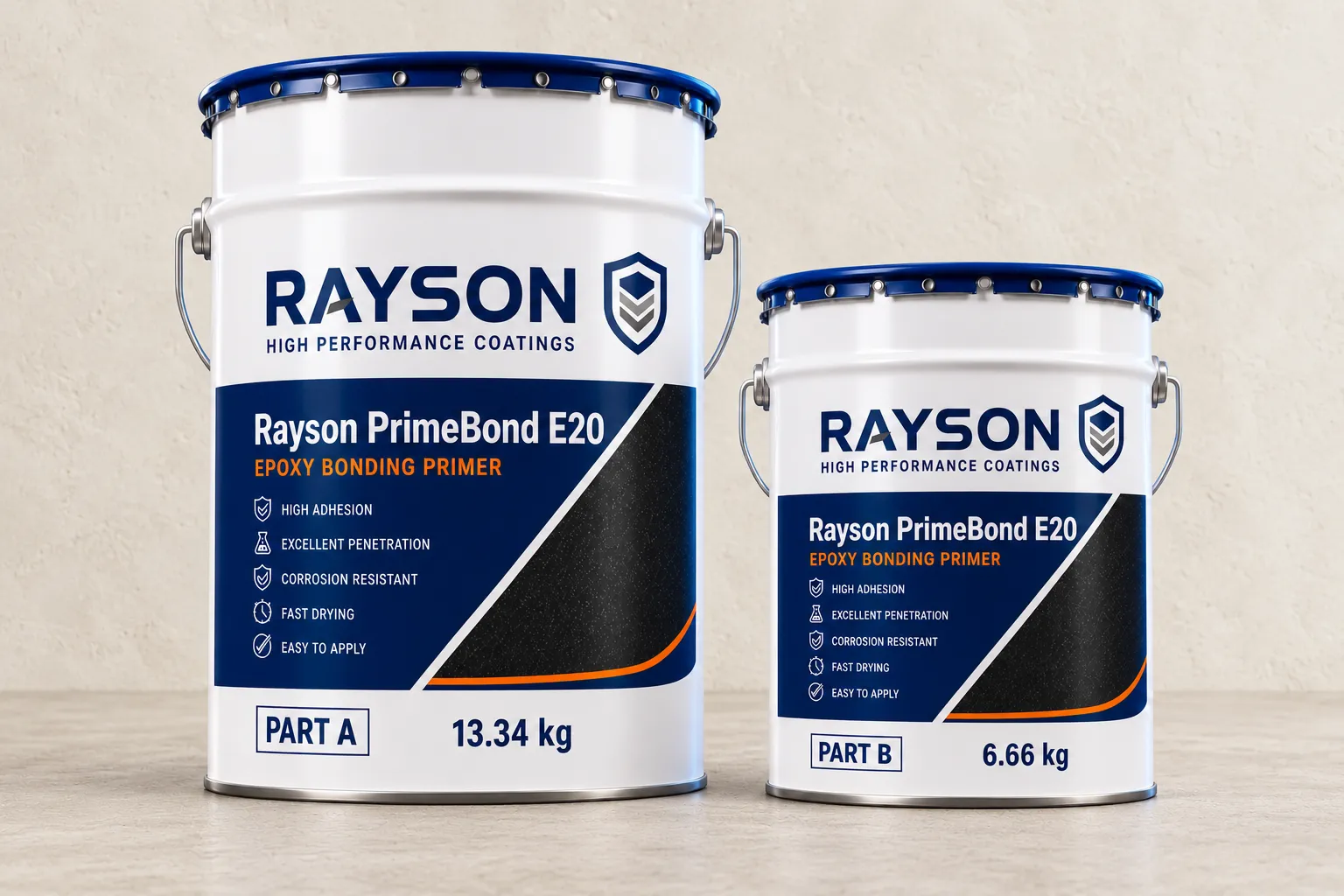
Rayson PrimeBond E20

Rayson PrimeBond E20 is a two-component, medium-viscosity, solvent-free epoxy bonding primer that anchors resin floor systems to concrete, screed, asphalt and prepared metal — on dry or damp substrates.

Specifications →
Rayson FloorGuard R50 pail

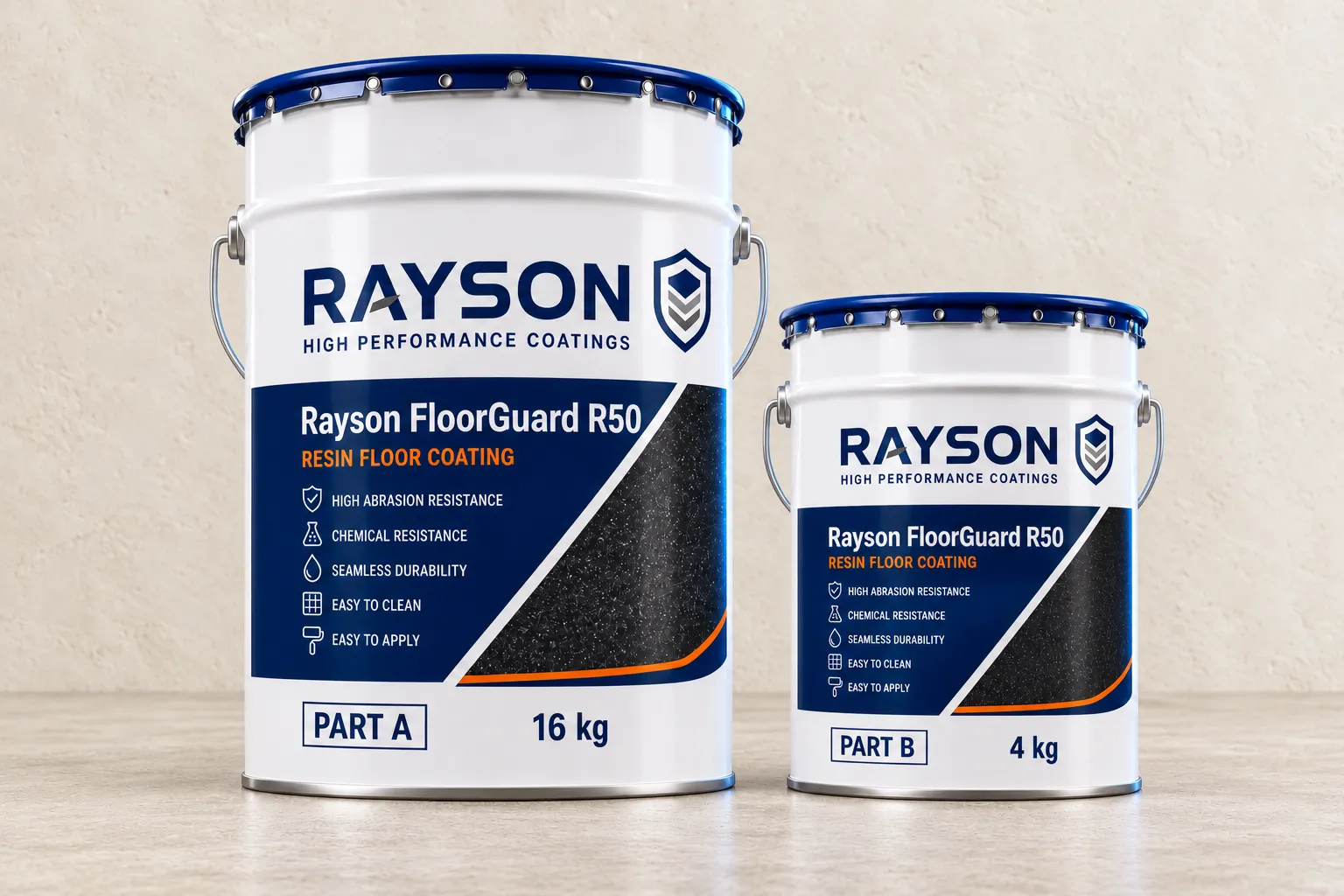
Rayson FloorGuard R50

Rayson FloorGuard R50 is a two-component, solvent-free high-solids epoxy floor coating that cures to a smooth gloss — or a slip-resistant finish when broadcast with aggregate — for concrete and screed under normal to medium-heavy wear.

Specifications →
Rayson LevelShield SL120 pail

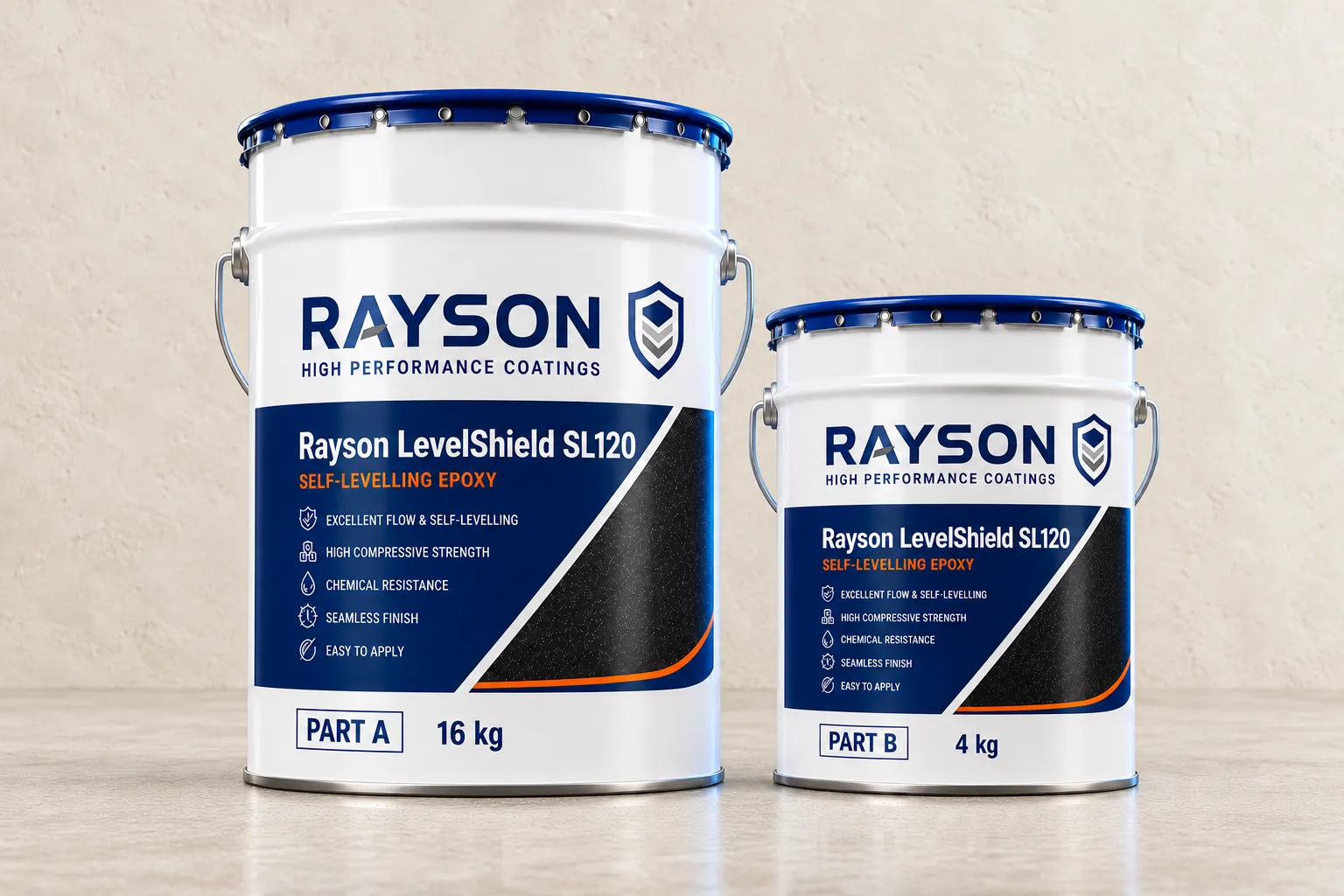
Rayson LevelShield SL120

Rayson LevelShield SL120 is a solvent-free, two-component, self-smoothing epoxy floor system that delivers a seamless wearing surface with medium to heavy chemical resistance and high mechanical strength.

Specifications →
Rayson PurScreed PC70 pail

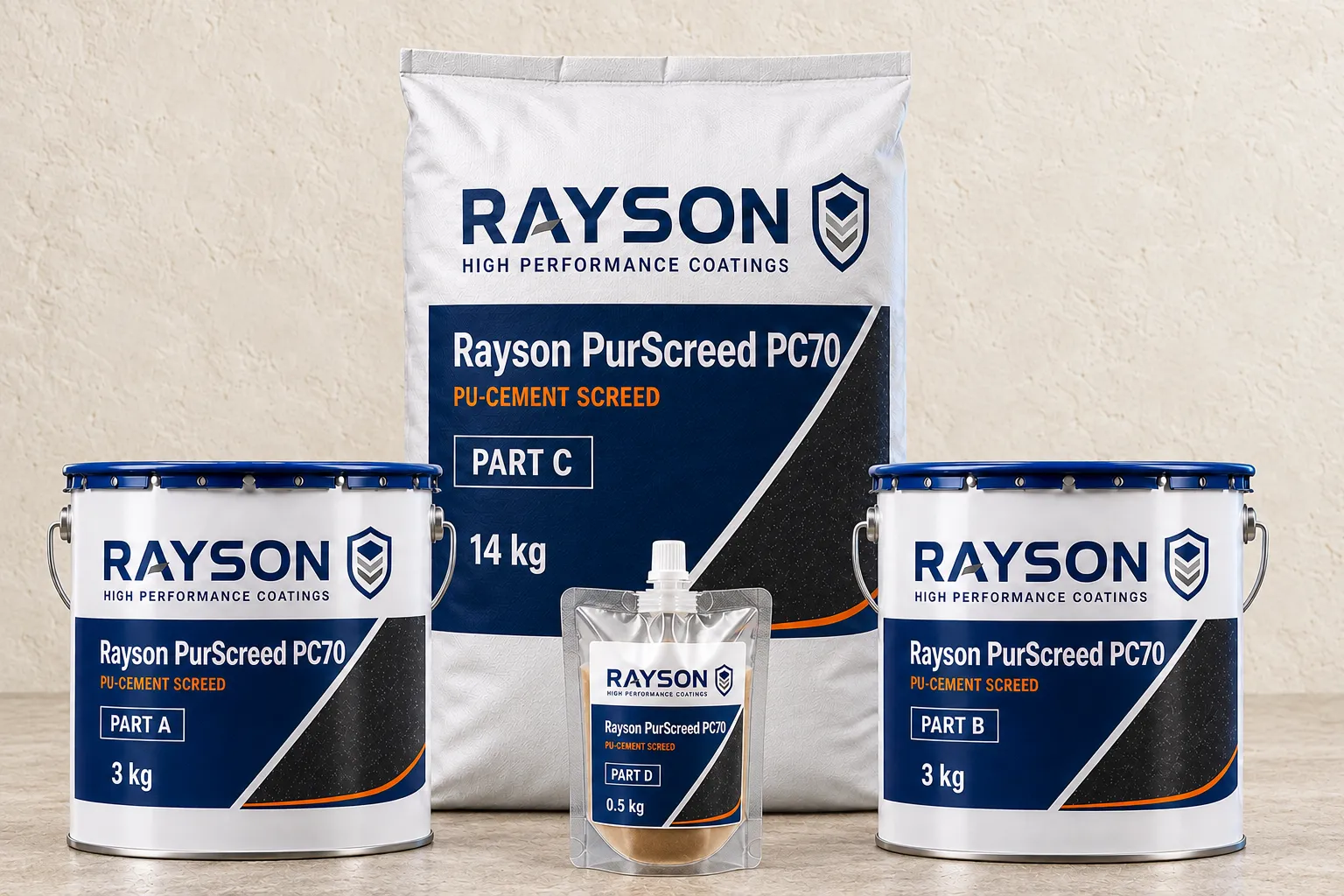
Rayson PurScreed PC70

Rayson PurScreed PC70 is a four-part, water-based polyurethane-cement self-smoothing screed installed at 1.5–3 mm for medium to heavy-duty industrial floors with high chemical resistance.

Specifications →
Go deeper

The pages for the work itself

Each with the Rayson layers it uses

01 Rayson system Layers: LevelShield SL120 in the forklift aisles and loading bays; PrimeBond E20 epoxy primer; Factory slab, moisture- and bond-tested, ground

Epoxy flooring in KL and Selangor

Factory, warehouse, car park, showroom and home floors in the Klang Valley, with the Rayson system named for the traffic.

  1. LevelShield SL120 in the forklift aisles and loading bays
  2. PrimeBond E20 epoxy primer
  3. Factory slab, moisture- and bond-tested, ground

Storage halls, workshops and garages: FloorGuard R50, two coats. Hot washdown: PurScreed PC70. Showrooms: R50 under UraForce WB58.

Quoted after inspection
02 Rayson system Layers: UraForce WB58 polyurethane topcoat; FloorGuard R50 epoxy in your colour; PrimeBond E20 epoxy primer; Concrete floor, keyed and repaired

Home epoxy flooring

Garages, kitchens, living rooms and porches: plain coloured epoxy by Rayson, IFS metallic and flake finishes over Rayson primer.

  1. UraForce WB58 polyurethane topcoat
  2. FloorGuard R50 epoxy in your colour
  3. PrimeBond E20 epoxy primer
  4. Concrete floor, keyed and repaired

Metallic and flake finishes: IFS Metallic Epoxy or Epoxy Flake Lining, over the same primer.

Quoted after inspection
03 Rayson system Layers: LevelShield SL120 self-levelling epoxy; PrimeBond E20 epoxy primer; Concrete slab, ground, joints and cracks repaired

Warehouse and logistics floors

Forklift aisles, racking zones and loading bays in warehouses and distribution centres, in self-levelling or roller-applied epoxy.

  1. LevelShield SL120 self-levelling epoxy
  2. PrimeBond E20 epoxy primer
  3. Concrete slab, ground, joints and cracks repaired

Racking and storage zones: FloorGuard R50 roller coats. Heavy traffic with spillage: PurScreed PC70.

Quoted after inspection
More guides

Other decisions before you buy a floor

  • Microcement vs tiles: For bathrooms, condos and shops: which is better where, covering old tiles without hacking, the waterproofing under both, disadvantages, repairs and cost.
  • Epoxy vs tiles: For homes, porches, garages, kitchens and shops: which is better where, coating over tiles, slip, sunlight, repairs, disadvantages and cost.
  • Epoxy over tiles: Whether an epoxy floor can go over existing tiles, how an applicator prepares and primes them, what it costs against hacking, and when the tiles must come up.
  • What decides the cost of microcement: The six things that set the price of microcement per square foot, what a fair quotation lists, and why a bathroom costs more than a dry room.

All guides

The practical details

Questions people ask

How much does 1,000 sq ft of epoxy flooring cost?

1,000 sq ft is about 93 m². On sound concrete a two-coat FloorGuard R50 floor takes 56 to 93 kg of epoxy, three to five 20 kg sets, plus one 20 kg set of PrimeBond E20 as the primer; a LevelShield SL120 self-levelling floor takes eight to ten sets. The labour of preparation and application is added after inspection, so the price is quoted once the floor has been seen.

Is it expensive to epoxy a floor?

Compared with what? On a sound, dry slab a roller-coat floor is a small quantity of material and a few days’ work. What makes a floor expensive is the preparation of a bad slab, a self-levelling or PU-cement system chosen for heavy traffic, or a decorative finish. A fair quotation shows which.

Is epoxy cheaper than tiles?

It depends on the floor, and the guide to epoxy or tiles sets it out: a coating over sound tiles avoids the hacking and a new screed, while a decorative or UV-stable build costs more than a plain roller coat.

Why do quotations for the same floor differ so much?

Usually because they price different floors: one includes grinding, repairs and a primer, another a thin coat on an unprepared slab; one names the product and its thickness, another does not. Compare the lists line by line, not the totals.

Does Rayson quote the installation?

The Rayson-authorised applicator for your area does: it inspects, quotes, contracts with you and warrants the workmanship. Rayson makes the materials, writes the specification and warrants the material; materials ordered direct are quoted per order.

Do anti-slip and UV-stable finishes cost more?

Yes, each is an extra step: aggregate broadcast into the coat for grip, or a UraForce WB58 topcoat where daylight would yellow the epoxy. They go only where the floor needs them, and the quotation lists them separately.

Start a conversation / ↗

Send the job, or ask for materials

Tell us what the surface is, where it is and what it has to withstand. Rayson replies with a system recommendation; for installation, the applicator for your area in Johor, Kuala Lumpur or Penang is introduced to quote the job.

Malaysia launch: 1 March 2027. Enquiries are welcome now; supply, site assessment and installation timing are confirmed for each project.

Thank you. Your enquiry has been received and we reply within one working day, Monday to Friday.

WhatsApp
WhatsApp three photos